To retrieve my money for the month of September, since the university presumes that it takes a while to set up a bank account, I got this odd piece of paper called "authorisation of withdrawal" with many signatures and stamps and seals decorating it. All I had to do was take it to the BCV with my passport to retrieve my money. Since I was opening an account right away, I asked for the largest bills possible... which are apparently 1,000 franc bills O.o Anyway, I had to wait for awhile before I could meet with an agent who could open an account for me, so I checked out a nearby supermarket that's suppposed to be 'better quality' than the one I've been going to. All I notice is that the people aren't as friendly and they have the same brands and higher prices.
Upon my return, I got directed to a tiny elevator (which sort of looked like a vault), and went into an office to discuss options for my new Swiss bank account with Sara, my new banker. She started by asking my age and then announced the "bad news" that I couldn't have a student account, which wasn't even what I was looking for, since I know that student stuff in Europe is age-dependent and not student-status dependent. Next, she informed me that since I'm an American, I'd have to sign a special paper saying that I understand that Switzerland no longer keeps the banking details of American citizens a secret from the IRS. She then went on to explain that if I opened my account with $10,000 I could get such and such options, and with $50,000, even more options. I showed her my paper from the university showing how much I'll be making per month and she said "oh, well, the IRS won't be interested in you, anyway." She also directed me towards the cheapest bank account and stopped all talk of large deposits!
The banking options were quite different from what I'm used to in the US or even in France. In both countries, you open up an account, get a debit card (with a Visa/Mastercard symbol), a check book, and online access for about $7 a month, or less if there's some sort of special promotion. If you're a customer, you can always go to the bank in person and do things at the counter, like when I bought Travelers Cheques at Norway Savings Bank before going to Switzerland. Normal, right?
Not so much the case in Switzerland. The first thing that seemed strange for me, is that the major difference between the cheap, 1 franc a month account, and the 15 franc a month account was that with the 1 franc account you can only go do things at the counter once a month without paying extra fees. I told Sara that I'd take the more expensive account, then, because I'd like to be able to use the bank whenever I want and however I wanted, it being my money! Then Sara got me with a bit of logic by asking me how often I do things at the counter at the bank..... it's true that with e-banking, and ATMs that allow you to deposit money, etc., I probably only go INSIDE the bank once every two months or so. So, why not save 14 francs a month? Can't argue with the reasoning.
Of course, this is the exact opposite of how I was treated in France, where I wasn't allowed to have a checkbook or debit card until I had my long stay permit, and had to go to the counter everytime I wanted to withdraw money.
The next thing I noticed was that none of the accounts made mention of a checkbook. "None of the accounts have checkbooks?"
"No.... of course not. We don't use checks in Switzerland. We never have."
"But.... how do you pay for things?"
"By bank transfer or debit card or cash. There's too much fraud with checks!"
Well, there's plenty of fraud with bank transfers or debit cards and even cash, but I'm not going to be the one to change the way the country has always operated, so I'm just going to have to roll with it!
The other thing that I noticed is that my debit card doesn't have a Visa or Mastercard symbol. This severly reduces the number of places I can use the card outside of Europe (or online), but it's still accepted more widely than Amerian Express, haha.
Finally, after that bit of culture shock, I signed my paperwork, and was the proud owner of a non-secret Swiss bank account! Naturally, I wanted to put my very large bills in, so I didn't have to walk around town with that large sum of money. This is what the secretary at the university advised me to do to avoid getting robbed.
Think again! I had to wait for my debit card, pin code, and online access codes in the mail first. In the meantime, I guess it was just an account with no money in it that was completely useless?
I opened my account on September 9 and was finally able to put money on it on September 20... yeeesh. In the meantime, I had found a hiding spot so good for my money that I nearly forgot where I had hidden it when I went to make the deposit!
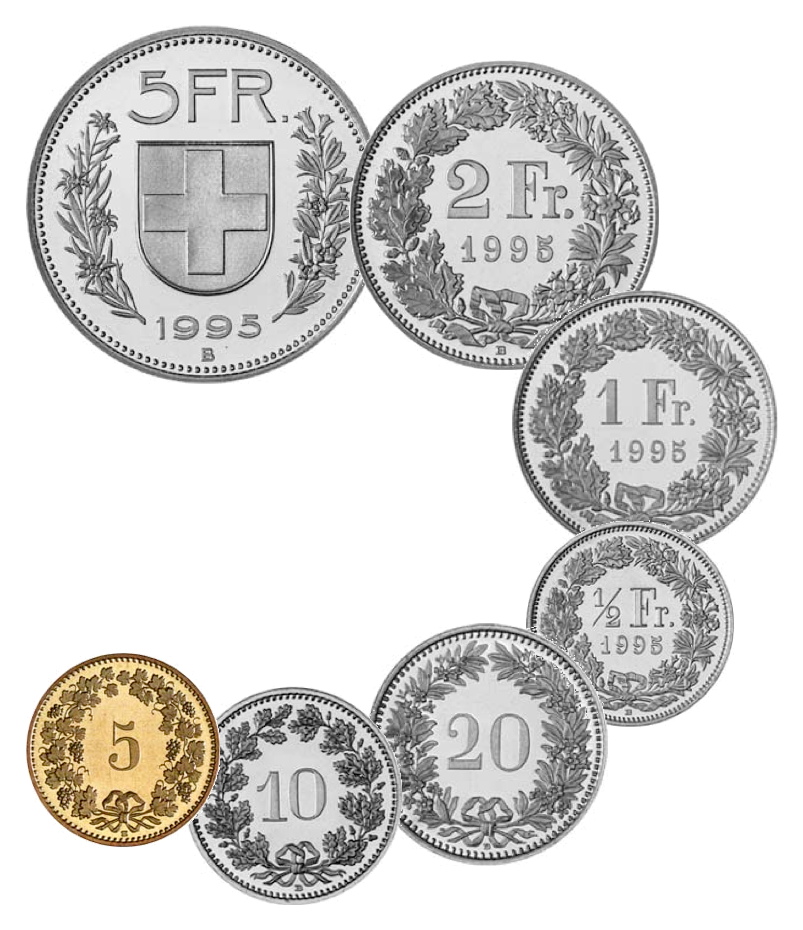
Since we're on the topic of money, here's some info on the Swiss franc! Nobody ventured any guesses about the sum in my hand in my previous post, so I guess that's just going to have to remain a mystery.

The Swiss franc is the currency in Switzerland, Liechtenstein, and the Italian exclave Campione d'Italia, according to our dear friends at Wikipedia.

No comments:
Post a Comment